Cycling has Rapha. Running has Tracksmith. Golf has Malbon. Every sport has a brand that sells what the game means instead of what it measures. And every sport has an object the player becomes one with: the bike, the shoe, the putter, the glove.
Soccer is the largest sport on earth, and no brand sells what it means, because the object it would draw that meaning from lost it. The craft was abandoned to machines. The people who still make the ball by hand were long forgotten. The player was taught to treat it as a throwaway. And now the most important part of the game, the only thing you need to play it, is the most neglected piece of the game.
Javid Gomez.
On Soccer.com's Best Soccer Balls of 2026.
Stocked by the two largest soccer retailers in the country.
4.98 from 57 owners.
152 prototypes before the first ball was sold.
“Definitely the best ball I’ve ever used, and I’ve played for over 20 years.”
Marissa M.
“Hayworth revives the lost art of hand-stitched soccer balls.”
Gear Patrol
A new category: the craft soccer ball.
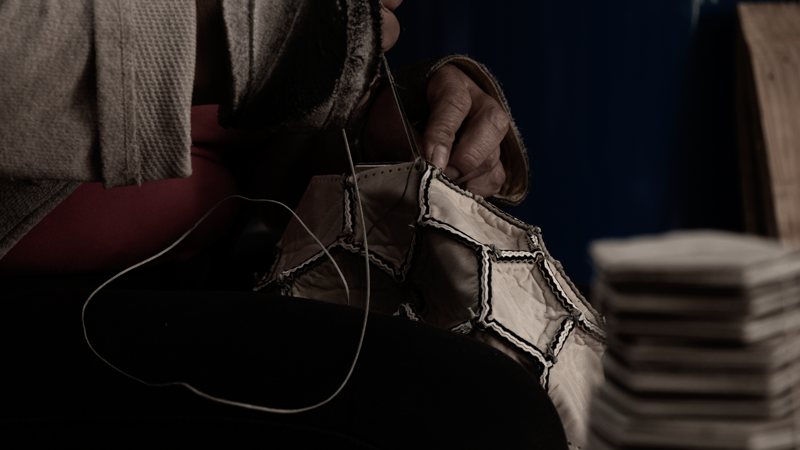
Hand-stitching a ball is a craft the industry is abandoning fast. Five years ago it was 80 to 90 percent of what Sialkot, Pakistan made; today it is about 20 percent, and the makers there expect it to leave mainstream production within a decade. A machine finishes 50 to 70 balls a day. A hand stitcher finishes two or three.
Monguí, which has made balls for more than ninety years, held on to the handmade craft. Hayworth is built on the people who never stopped, and it pays them properly for it.
In every category where a factory took over, a craft tier has since grown beside it. Beer had Budweiser. It got Sierra Nevada. Cast iron had Lodge. It got Field Company. Ice cream had Breyers. It got Ben & Jerry’s. Soccer has only ever had Budweiser, Lodge, and Breyers. Hayworth is its Sierra Nevada.
The workshop, Monguí. Tizne Films.
· · ·
Nobody needs to buy a craft soccer ball. So why would anyone pay $135 for one when a $30 ball plays the same game? They already do it in every other aisle: a Field Company skillet costs six times a Lodge, a Sierra Nevada about a third more than a Budweiser, a pint of Ben & Jerry’s about twice a Breyers. For the same reason anyone buys a craft anything: a handmade object is understood to carry its maker’s care, so people value it more, pay more for it, and choose it first when the gift is for someone they love. Visible hours of work read as quality. A named place and a real history are believed where a logo is not. A factory cannot make any of that, because the factory is the thing it is not. That is the moat.
Fuchs, Schreier and Van Osselaer, Journal of Marketing, 2015. Kruger and others, Journal of Experimental Social Psychology, 2004. Beverland, Journal of Management Studies, 2005.
Where we are headed
Horizon 1 · 0 to 1
Horizon 2 · 1 to 3
Horizon 3 · 3 to 10
The craft ball.Prove the demand.This raise.
Master ballmakers.The craft ball brand.Known across the game.
The American soccer brand.The meaning brand.Game-adjacent, performance and casual wear. Boots.
Patagonia: pitons for sixteen years, then the shirt.
YETI: a cooler for years, then drinkware and the rest.
Burton: a board before a jacket.
Hayworth: a ball, made by hand, before anything else.
Every brand that came to stand for something larger than what it sold started with one object, made better than anyone else's, adopted by the people who use it hardest. The trust was earned on the object first. Everything else was built on it.
Hayworth is three quarters of the way through Horizon 1. The hardest part is done: the ball is built, 152 prototypes deep, made by hand at Good Stitch in Monguí, and already on a major best-balls list. What remains in Horizon 1 is proving demand. This raise funds that proof, in three moves.
Establish the entire ball line. The Field, Heritage and Makers Series, all three on sale within the year.
Tell the story. Trusted people, on camera, saying what the ball is. Coaches and soccer creators show it up close to the people who already listen to them.
Prove the demand. The evidence that people buy the ball when they are told what it is.
Each horizon opens the next. A craft ball that sells earns the right to be the brand of the craft ball, known across the game: that is Horizon 2. A brand known across the game earns the right to become the American soccer brand, the meaning brand, in game-adjacent wear, performance and casual, and in boots: that is Horizon 3. This raise is for Horizon 1 only. The company is being built for Horizon 3.
2Company and product
The Field Series. The Standard Model No. 152, the ball the company sells today. Built to be played hard and to last: the durable everyday ball, and the introduction to the brand.
The Heritage Series. The special game ball. A Japanese microfiber cover on the same hand-stitched build, our best-playing ball, each one named for a place in American or soccer history. Before the end of 2026.
The Makers Series. Our finest craftsmanship, in honor of the game. Numbered, 100 or fewer, four a year; the Ellis is first, next month. and up
The Training Ball. TBD, as the market dictates.TBD
3Market and buyers
Around 25 million Americans play soccer, the third most played team sport in the country, behind basketball and baseball. The big brands sell the ball at four tiers, every one of them a factory product: pro, competition, league and club. Adidas’s 2026 World Cup ball runs from $170 for the Pro to $32 for the Club. No craft tier exists.
Performance
Meaning
Scale
Cycling
Trek, SpecializedSells speed
RaphaThe romantic amateur
Sold to the Walton family for £200 million in 2017
Running
Nike, HokaSells pace
TracksmithThe committed amateur
Private; about $25 million a year by outside estimates
Golf
Titleist, CallawaySells distance
MalbonGolf without the club
Approaching $100 million a year
Soccer
Nike, AdidasSells the pros
OpenThe American soccer believer
The largest sport on earth
The sport-adjacent meaning aisle. Rapha: Cyclingnews, 2017. Tracksmith: ECDB estimate, 2025. Malbon: Shop Eat Surf Outdoor, 2025.
The gifter. 35 to 55, buying for someone who loves the game.No one remembers who gave them a thirty-dollar ball.
The player. 16 to 30, replaces a ball every one to two years.
The tastemaker. Buys objects for how they are made.
The coach and lover of the game. The most credible voice.
4Team
Justin Lea
Founder, CEO
Hayworth Athletic, La Caza Spirits, Taos Brewing Company, Sole Practitioner, FIFA 2-Star Field
Vince Cicciarelli
Finance and capital
LPC Ventures, Lincoln Property Company, JLL Spark, CrowdStreet, University of Notre Dame
Eric Gautschi
Creative Direction
Match/Cut Productions, Ogilvy Interactive, English Premier League, American Outlaws, Oosa Oosa
Nickel City, Leroy and Lewis BBQ, Excelsior Hospitality, Koko’s Bavarian
Good Stitch SAS
The workshop
Monguí, Colombia. Guillermo Blanco and the workshop family; the craft since 1932
Fractional CMO
To be hired, from month one.
5Marketing and sales
The heart of the strategy. A trusted person tells the buyer what the ball is.
The bet. For we put the ball in front of of the right people, about times each; come and look; buy; and with the other avenues, stores and today’s sales included, about balls.
Many voices, not one video. balls seeded to soccer creators and launch guests, about posting, each holding the ball; two or three coaches or trainers with real followings, paid to make a film. By February the links show which posts sell, and the ad money goes behind them.
That reaches the gifter on Instagram, the player on YouTube.
The ball can be held in a store or at a tournament.
A quarterly Makers drop keeps something new to talk about.
Ad money goes only behind a video that has already proven it sells.
None of this runs itself. Finding the right voices, briefing them, reading which videos sell and moving money toward them is a craft of its own. The first hire is a fractional CMO who has done it before; without that person the plan is a list, not a program.
This is how seven premium-object brands we studied found their first buyers: a trusted voice first, the object in a credible hand second, paid reach only behind what already worked. Six of the seven fit the pattern; the seventh is named.
The research behind it: seven brands, with sources
Ridge makes a metal wallet. In 2021 its chief operating officer, Sean Frank, said “Prices range from $75 for an aluminum wallet to $175, which is our Damascus design.” The company launched on Kickstarter in 2014 and reached $50 million in sales in 2020. The story was told first by YouTube creators, paid to place a short read for the wallet inside videos about other subjects. Frank in 2021: “We sponsor a lot of influencers on YouTube. Roughly 750 in 2020, when we spent $3.9 million on 3,000 unique videos. That’s 10 new videos a day that we’re integrated with.” He has also said the best channels are not about wallets: “One of our best performing channels is a guy who owns a farm, and he’s a veterinarian for horses, and he just posts content, and he just happens to have a Ridge Wallet in every one of his videos.” Ridge ran paid Facebook advertising alongside the creator program; in 2021 Frank noted “Our CPMs on Facebook were up 100 percent year-over-year for most of 2020,” and in 2022 Practical Ecommerce described influencer marketing as “Ridge Wallet’s principal revenue generator” and wrote that “Hyper-targeted Facebook ads produced strong results.” In January 2025 Frank wrote that holdout tests suggested “50-70% of meta spend seems wasted” and “We have cut meta from 70% of budgets in 2023 to 30% of budget in 2025.” Ridge’s creators were paid from the start; its story is paid creators before paid reach, not earned word of mouth.
YETI makes coolers and drinkware. Its first coolers went on sale in 2006 at $250 to $300, which Inc. called “an astounding premium” over the average cooler. The story was told first by fishermen and hunting guides, and by the founders themselves from a van. A 2017 interview with the National Center for the Middle Market says “the Seiderses spent countless weekends traveling across Texas with nothing but a van full of coolers to sell.” Inc. reported in 2016 that sales reached $29 million in 2011 “as word spread among the hardcore ‘hook and bullet’ crowd,” and that the 2015 surge “was the payoff from years of grassroots marketing to fishermen and hunters who not only spread the word but helped Yeti spill into other markets.” Roy Seiders on the customers: “People in Texas will brag that their cooler is grizzly-proof, even though there’s not a grizzly within 1,000 miles.” REI ran a test program in 2014 and expanded after it “went through the roof,” in the words of an REI merchandising manager. Inc. also reports that the company grew “with the help of an outside investor” into “a more sophisticated sales and marketing organization” after the word of mouth years; the date and size of YETI’s first paid advertising are not in the sources cited here.
Made In makes cookware. Its 10-inch stainless clad frying pan lists at $139 on the company’s site. The company launched in 2017. The story was told first by chefs. Six months after launch the founders sent a pitch deck to Tom Colicchio, who became an investor after a half-hour meeting, according to the Berkeley Haas magazine. Chief executive Chip Malt told Modern Retail in October 2021: “Chefs are the new athlete.” The article reports that restaurants “make up only 5% of its total sales,” but Malt said the chef community “makes up way larger than 5% of our mindshare” and that, by focusing on those tastemakers, “it’s an organic growth through that community.” He said sales grew five times in 2020. Made In’s paid advertising, and when it began, is not described in the sources cited here.
Solo Stove makes fire pits. The Bonfire with its stand lists at $299.99 on the company’s site. Brothers Jeff and Spencer Jan started with a small camp stove in 2011 and put the Bonfire fire pit on Kickstarter in 2016, where the campaign “hit its $15,000 goal in just two hours” and raised “more than $1.1 million,” per CNBC. The story was told first by backers and then by customers; a Solo Stove marketer told Attentive in 2026, “Our customers do a great job of speaking to the brand for us, and we want to give them platforms to do that.” Chief executive John Merris, hired in 2018, told an interviewer in 2021 that “We make very calculated decisions around our digital investments, and it’s all tied back to a return on ad spend. We don’t do anything blindly and we typically say no to any opportunity that can’t be measured.” The interviewer’s own remark in that piece was that “Solo Stove is all over Instagram.” This is the brand that does not fit the pattern below: measured paid advertising was central to its growth from early on.
Peak Design makes camera clips and bags. Its first object, the Capture clip, was offered on Kickstarter in 2011 at $50 for the preorder run and $100 for the first batch, so it sits below the $100 line; the bags that followed are above it. The story was told first by Kickstarter backers. Founder Peter Dering: “All I had was an idea that I thought was the bee’s knees.” The campaign “aimed to raise $10,000 in 75 days” and “surpassed that total in just two days, ultimately raising $364,698 from 5,258 backers,” per Retail Brew. Dering, on the REI Co-op Journal: “It was the first time I experienced the power of the internet. These strangers I’ve never met before were backing this gizmo.” The company has since launched eleven products on Kickstarter, raising about $36 million, and its founder calls the platform the firm’s “initial sales channel” and “community building platform.” Peak Design’s paid advertising is not described in the sources cited here.
Rumpl makes blankets. The original puffy blanket retails at $99, so it sits at the line rather than above it; the figure is from Shark Tank coverage. The story was told first by Kickstarter backers. Founder Wylie Robinson on the How I Hire podcast: “we decided to do a Kickstarter in December of 2013. And the Kickstarter campaign did really, really well and ended up doing about a quarter million dollars in sales in 30 days, which was wild to us. And that was like the clear sign that, okay, this is a viable idea.” On the first year: “Our first year in business, we did about a half million dollars of revenue.” In a 2024 interview he said: “we launched a Kickstarter campaign and raised $250,000 in 30 days, selling 2,000 units.” By the time of his 2020 Shark Tank appearance the blankets were sold at every REI, per Looper. Rumpl’s paid advertising, and when it began, is not described in the sources cited here.
Selkirk Sport makes pickleball paddles. Its Vanguard paddles list at $250 to $298 on the company’s site. Founded in 2014 by brothers Rob and Mike Barnes and their father, the company, in Business Insider’s words, spent years “breaking even” before the sport’s growth carried it; Forbes reports it is profitable, expects at least $100 million in revenue in 2026, and took its first outside investment, $30 million from Bluestone Equity Partners at a valuation of about $200 million, in January 2026. The story was told first by players and instructors. Mike Barnes, in the investment announcement: “we’ve built a cutting-edge retail and direct-to-consumer distribution channel, supported by investments in content platforms like Selkirk Pickleball TV, a brand ambassador program with more than 1,300 advocates across the U.S. and sponsorships of elite and emerging pickleball pros.” Rob Barnes: “We got into pickleball before it was cool. If you’re waiting to jump into the latest trend, you’re probably too late.” Selkirk’s paid advertising is not described in the sources cited here.
The pattern. Six of the seven brands found their first buyers through a person or a community the buyer already trusted, before the brand bought reach: YouTube creators for Ridge, guides and specialty retailers for YETI, chefs for Made In, backers for Peak Design and Rumpl, players and instructors for Selkirk. In each of those six the object was in a credible hand before a stranger was asked to pay for it, and where paid advertising appears in the record it comes after that. Solo Stove is the exception: it began on Kickstarter like Peak Design and Rumpl, but by its chief executive’s own account measured paid advertising was central to its growth early. Two cautions on the pattern itself. Ridge’s creators were paid from the start, so its story is paid creators before paid reach, not earned word of mouth. And for four of the seven brands the sources say nothing about paid advertising at all, so its absence from their early years is an inference from silence, not a documented fact.
The lanes work together: a creator video sells the ball in a store, a drop earns the press. The balls are the model’s attribution, lane by lane, and the total is the year.
6Growth: how fast momentum builds
Balls a quarter, three cases, year one
Case
Nov to Jan
Feb to Apr
May to Jul
Aug to Oct
Year
Revenue
Why
Revenue is at a blended price, about a ball in the base case: direct, Heritage, Makers, to stores. The blend is a result of the mix, not an input.
7Financial projections
Income statement · Three years · Three cases
Downside
Base
Upside
* A blend of five prices; it moves with the mix. Founder salary excluded.
In the downside, years two and three spend only what cash allows: marketing is cut to hold at least of cash, with a floor for the ads and content that keep the company visible. In year three even the floor dips below the cash line, and the case ends the third year at without drawing the second .
Cash · Three years · All three cases
Downside
Base
Upside
8Goals for growth
12 stores stocking for the gift seasonMid-November 2026
The Ellis released and doing its jobNovember 2026
Heritage Series launchedDecember 2026
A creator video pays for itselfSummer 2027
A Makers release with a waitlist larger than the editionAugust 2027
25 stores, 10 reordering, the year's numbers in handOctober 2027

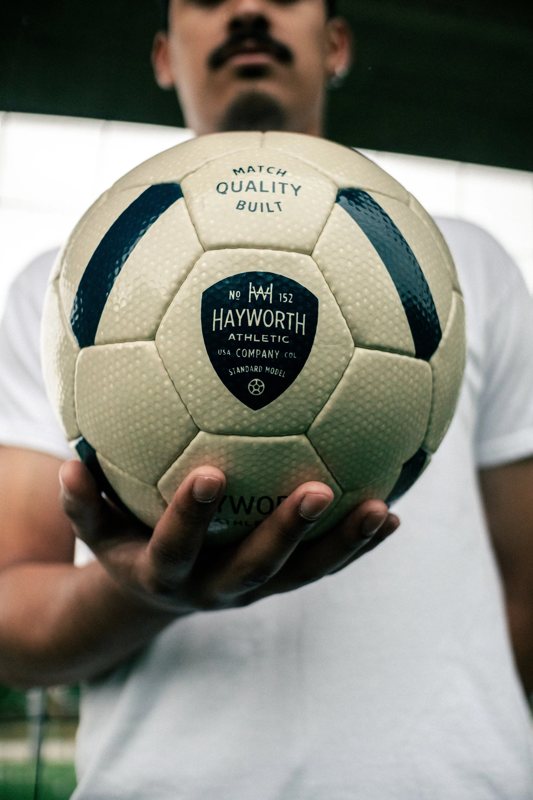
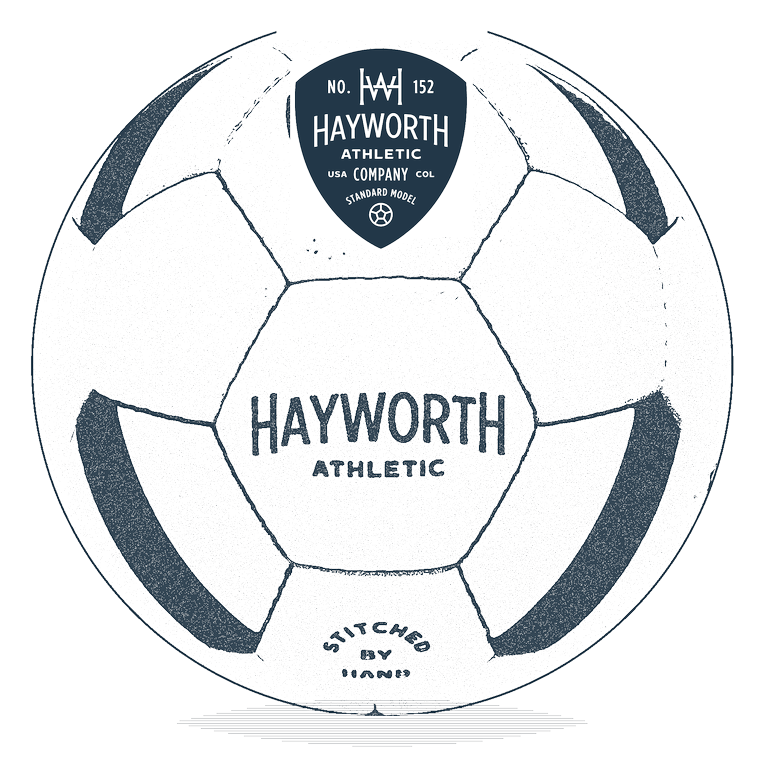 The Field Series. The Standard Model No. 152, the ball the company sells today. Built to be played hard and to last: the durable everyday ball, and the introduction to the brand.
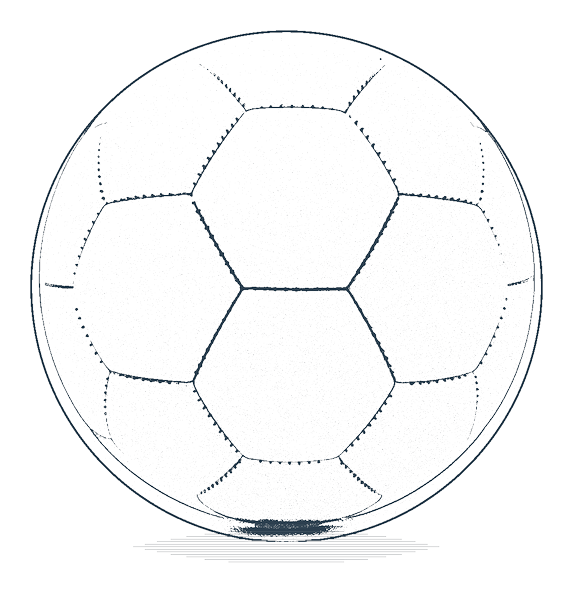 The Heritage Series. The special game ball. A Japanese microfiber cover on the same hand-stitched build, our best-playing ball, each one named for a place in American or soccer history. Before the end of 2026.
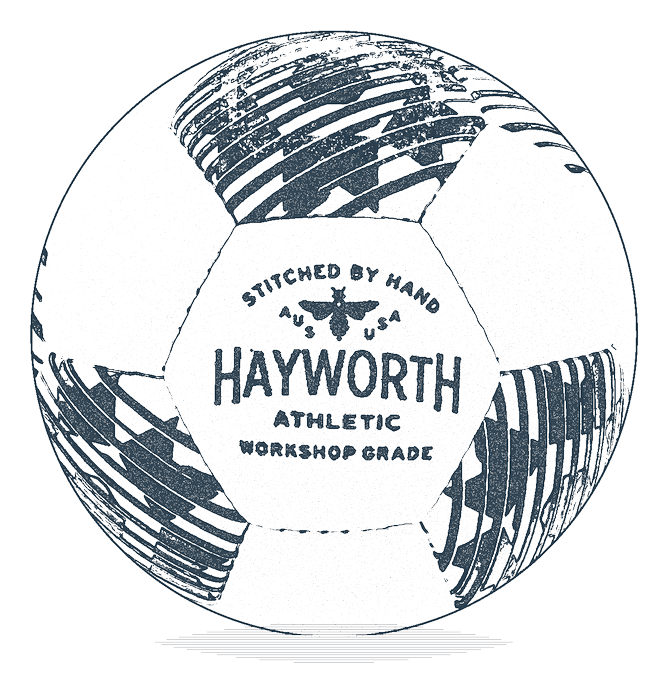 The Makers Series. Our finest craftsmanship, in honor of the game. Numbered, 100 or fewer, four a year; the Ellis is first, next month. and up
 The Training Ball. TBD, as the market dictates.TBD